

Key Takeaways
- Google Ads is worth it only when you can track real leads and revenue. Clicks, impressions, and traffic mean nothing if you cannot connect them to phone calls, form fills, booked appointments, or sales.
- A weak landing page will destroy your ad budget. Sending paid traffic to a generic homepage is one of the fastest ways small businesses waste money.
- High-intent keywords matter more than high-volume keywords. Terms like “emergency plumber near me” or “roof repair estimate” are far more valuable than broad searches like “plumbing” or “roofing.”
- Broad Match without negative keywords is dangerous. Small businesses must aggressively exclude irrelevant searches like “free,” “jobs,” “DIY,” “salary,” and “training.”
- The full system matters more than the ad account alone. Google Ads only works when targeting, landing pages, tracking, lead follow-up, and sales process are aligned — System Before Spend.
Your Google Ads Frustration Is Real
You spent $1,500/month on Google Ads for your company.
You got clicks.
And also got calls.
But the calls were from people asking for services you do not offer, people outside your service area, tire-kickers looking for the cheapest quote, or random leads that never turned into booked work.
Then your ad guy told you, “The algorithm needs more time.”
Five months later, you are nearly $8,000 in, and you still cannot clearly answer the only question that matters:
Did Google Ads make me money?
That is not a small-business problem.
That is a broken ad system problem.
And no, you are not crazy for thinking door hangers and yard signs feel more honest. At least with door hangers, you know what you paid, where they went, and whether the phone rang.
With bad Google Ads, you get a dashboard full of “clicks,” “impressions,” and “conversions” that somehow do not match your actual phone calls, jobs, or revenue.
So, is Google Ads worth it for small businesses?
Yes, but only when the account is built around qualified leads, clean tracking, tight targeting, and a landing page that converts.
If you skip those pieces, Google Ads becomes an expensive slot machine.
Why Google Ads Feels Broken for Small Businesses
Google Ads is not broken because small businesses cannot compete.
It feels broken because the default setup is built to spend your money as efficiently as possible for Google.
Not necessarily to get you profitable jobs.
That is the part most business owners do not get told.
Google’s interface constantly nudges advertisers toward automation, broad targeting, and “recommended” settings that increase reach. More reach sounds good until you realize reach includes people who are:
- Outside your service area
- Searching for jobs you do not offer
- Looking for DIY advice
- Comparing prices with no buying intent
- Clicking from irrelevant partner websites
- Calling about 150 jobs when you need 2,500 projects
For a small business, that is deadly.
You do not have a Fortune 500 testing budget.
You need your ad dollars pointed at real commercial intent.
For context, Google Ads across industries averaged a 6.42% click-through rate and a 6.96% conversion rate in 2024. Home services businesses like plumbers, HVAC companies, roofers, and similar local operators often see a lower CTR around 5.59%, with highly competitive CPCs.
That means every click matters.
If you are paying $8, $15, $25, or more per click, you cannot afford to send that traffic into a sloppy campaign structure, a generic homepage, or broken tracking.
That is how a landscaping company spends $8,000 and still cannot explain what happened.
The Real Reason Your Google Ads Are Getting Bad Leads
Let’s break down what probably happened in that Fiverr setup.
I am not saying every low-cost freelancer is bad. Some are solid.
But a $500 Google Ads setup for a local service business often means shortcuts. And shortcuts in paid search usually show up as wasted spend.
1. Your Keywords Were Probably Too Broad
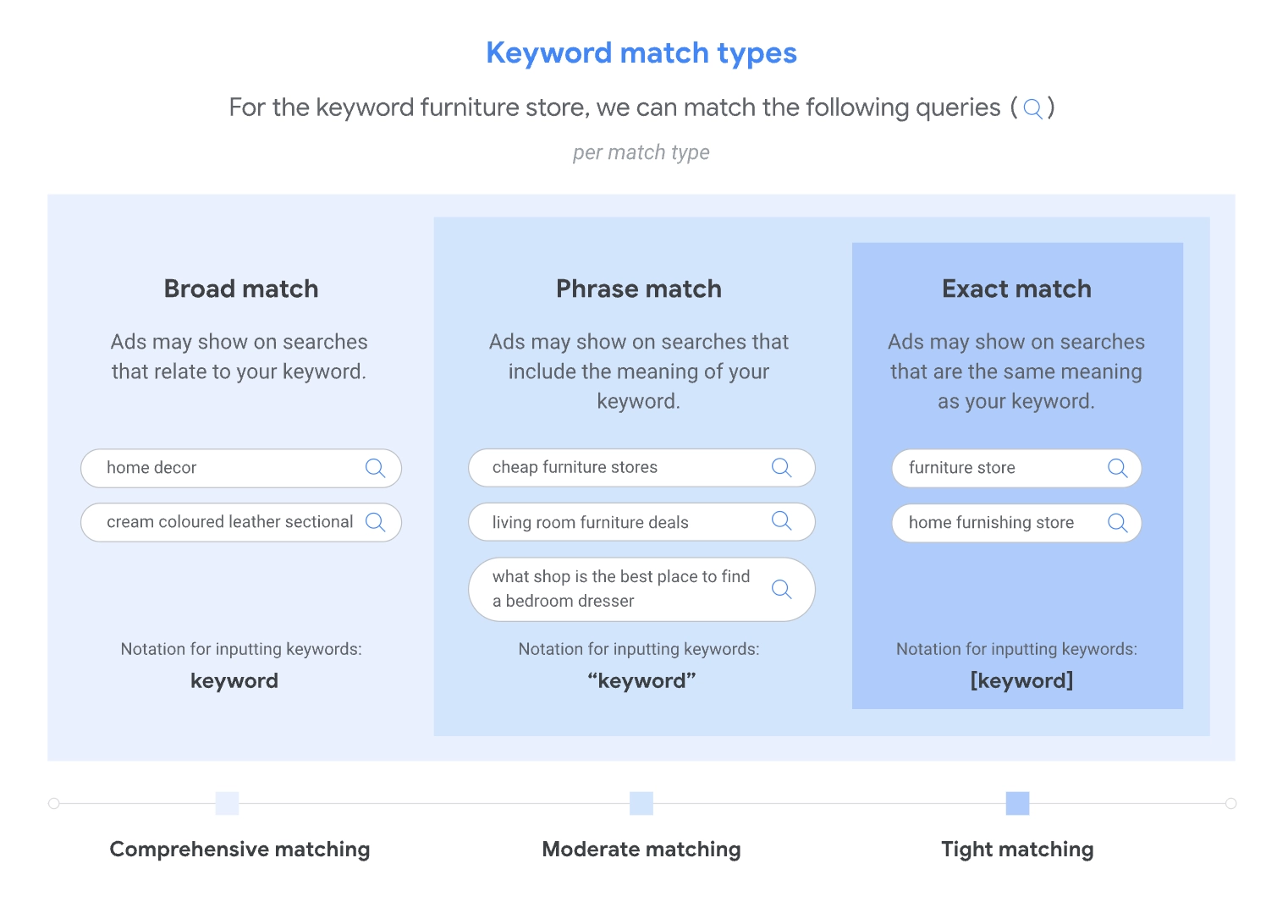
This is the first place I would look.
If your campaign used Broad Match keywords like (Example: Landscaping Business):
- landscaping
- lawn care
- garden service
- backyard design
- yard work
- landscaper near me
Google can match those to a much wider range of searches than you expect.
You might think “landscaping” means profitable design-build projects.
Google might show your ad for:
- cheap lawn mowing near me
- landscaping jobs hiring
- DIY backyard landscaping ideas
- free mulch delivery
- snow removal contractor
- tree removal service
- landscaper 45 minutes away
- how to start a landscaping business
That is not a lead-quality issue.
That is a targeting issue.
For small local businesses, we usually start with Exact Match and Phrase Match before touching Broad Match.
Broad Match can work later, but only when the account has enough clean conversion data and a strong negative keyword list.
Using Broad Match too early is like handing Google your credit card and saying, “Go find me something vaguely related.”
Bad idea.
2. Your Negative Keyword List Was Probably Weak or Nonexistent
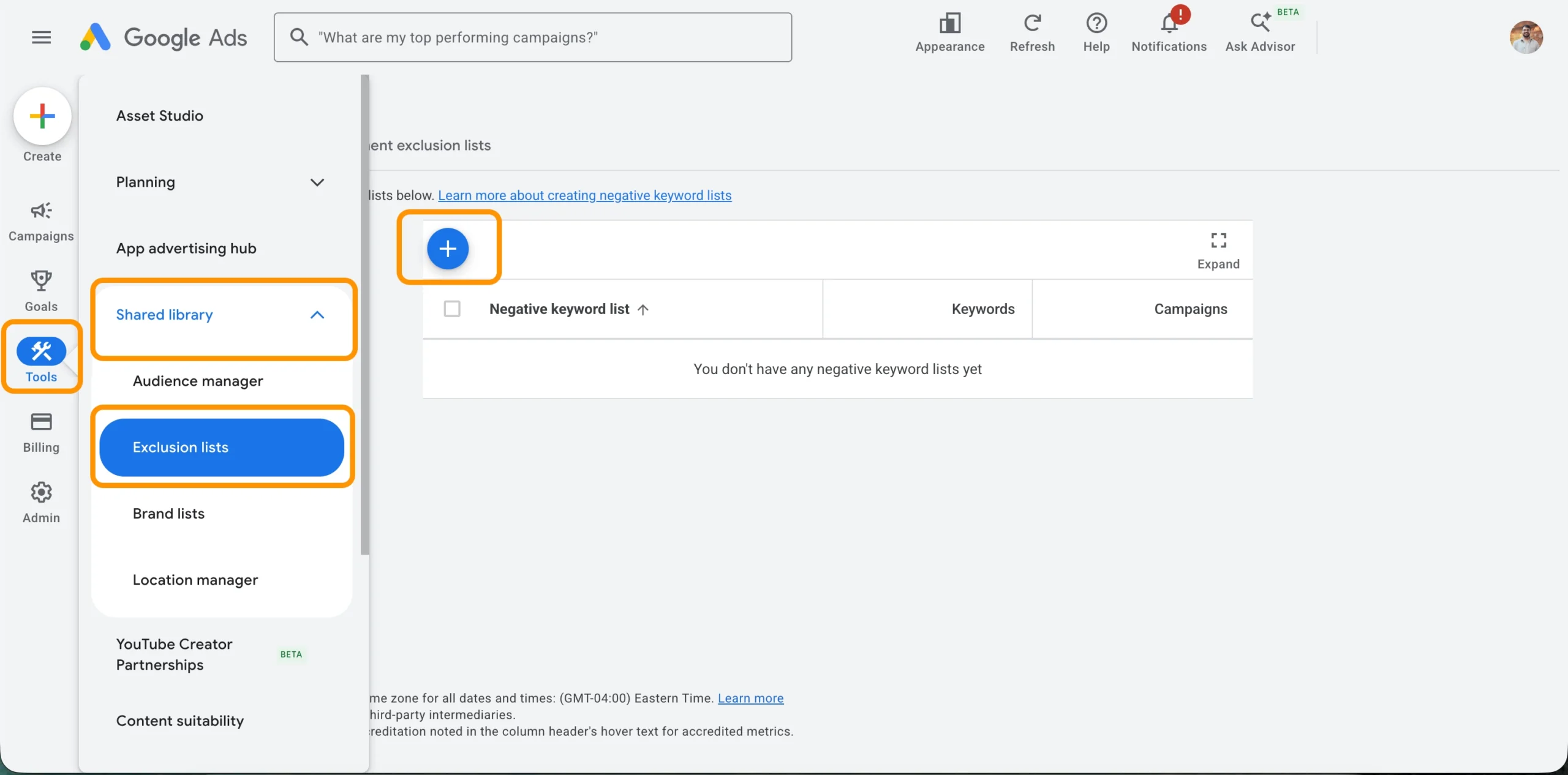
A negative keyword tells Google what you do not want to pay for.
For a landscaping company, your negative keyword list might need terms like:
- jobs
- hiring
- salary
- DIY
- free
- cheap
- course
- template
- pictures
- ideas
- supplies
- equipment
- used mower
- home depot
- artificial turf (if you do not offer it)
- snow removal (if you do not offer it)
- tree removal (if you do not offer it)
- lawn mowing (if you only want larger landscape projects)
This list should be built before launch.
Then it should be expanded weekly using the Search Terms Report.
If nobody reviewed your search terms for five months, that is not “letting the algorithm learn.”
That is negligence.
Go into Google Ads and check:
Campaigns → Insights and reports → Search terms
Look at the actual phrases people typed before clicking your ads.
That report will tell you very quickly whether your budget went toward real buyers or garbage traffic.
3. Your Location Targeting May Be Leaking Money
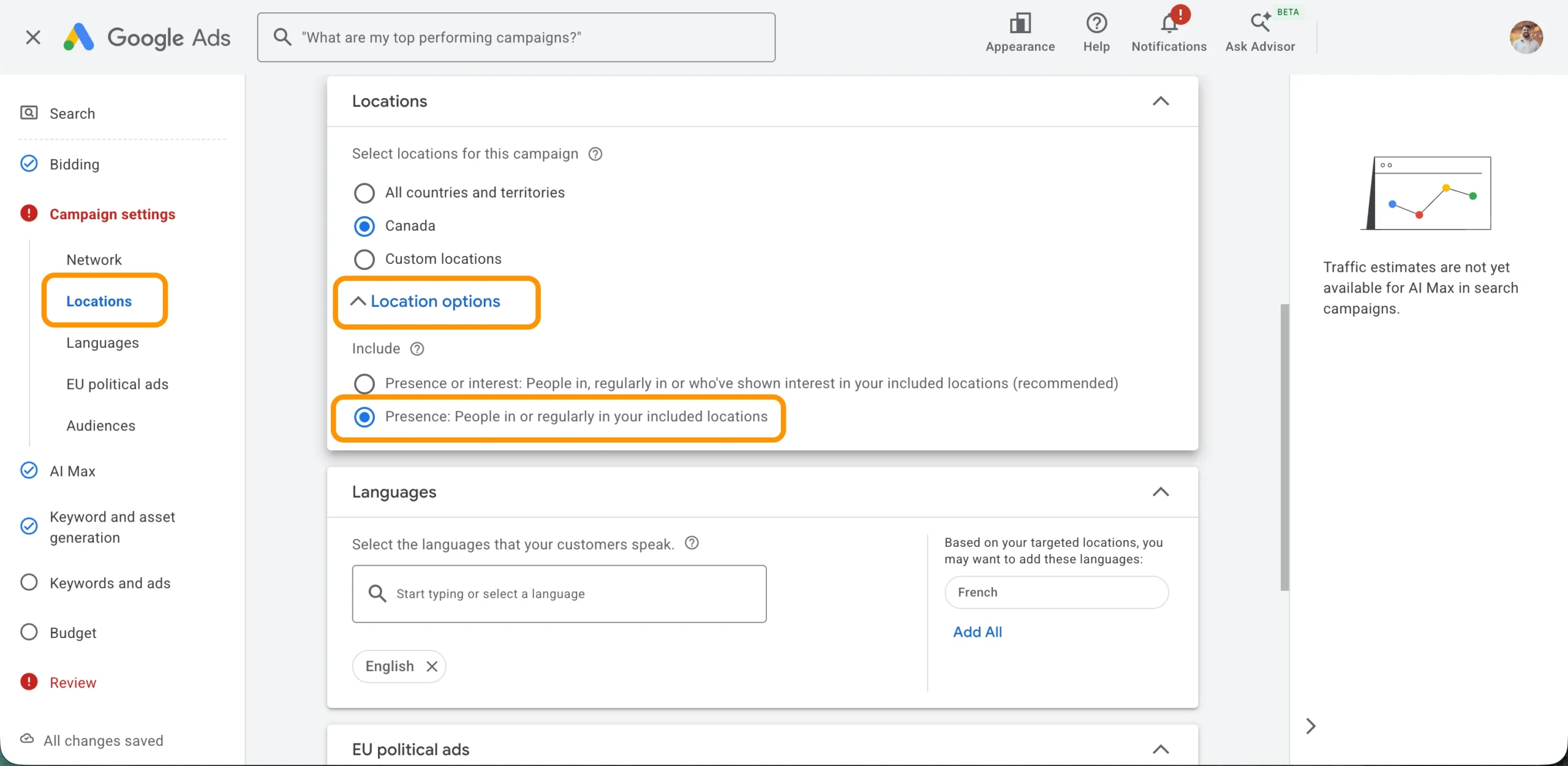
This one is brutal for local service businesses.
Google Ads has a location setting that can show your ads to people who are interested in your target area, not just people physically located there.
That means someone outside your real service area could still trigger your ads.
For a landscaping company, that can create exactly the problem you described:
People calling from 45 minutes outside your service area.
You want to check your campaign location settings and make sure you are targeting people who are actually in your service area.
Look for the setting that controls whether ads show to:
- People in or regularly in your targeted locations
- People interested in your targeted locations
For local service businesses, we almost always want the tighter option.
Your ad budget should not be educating Google on geography.
4. Google Support Is Not Your Strategy Team
You called Google support and they tried to get you to spend more.
That’s a Trap.
Google reps are not evil, but their incentives are not the same as yours.
Your goal is:
More qualified landscaping jobs at a profitable cost per lead.
Google’s goal is:
More ad spend flowing through the platform.
Those are not always aligned.
Google may recommend:
- Increasing budget
- Using Broad Match
- Turning on automated bidding too early
- Expanding locations
- Adding Search Partners
- Removing “limited by budget” warnings
- Applying auto-recommendations
Some of those recommendations can work in the right account.
But in a small-business account with messy tracking and low-quality leads, those changes can make the problem worse.
Do not optimize for Google’s recommendation score.
Optimize for booked jobs, qualified calls, and revenue.
5. Your “Conversions” Are Probably Not Real Business Outcomes
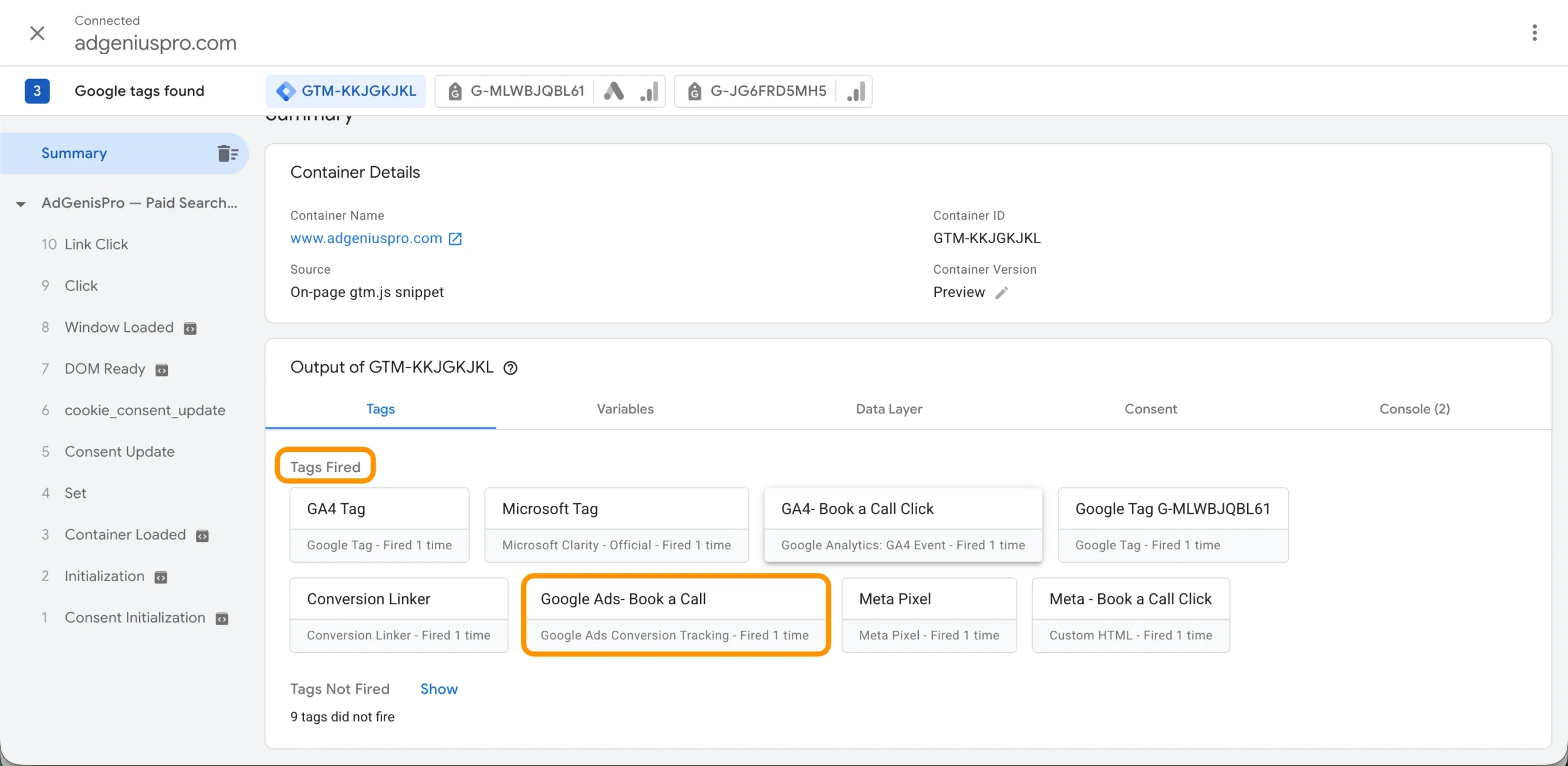
This is the part that makes owners lose trust fast.
You see “conversions” in the dashboard.
But those conversions do not match your actual phone calls.
That usually means tracking was set up poorly.
Common mistakes include counting:
- Page views as conversions
- Button clicks as conversions
- Calls that lasted 5 seconds
- Duplicate form submissions
- Thank-you page reloads
- Random imported GA4 events
- Unqualified calls
- Direction clicks
- Click-to-call taps that never connected
That is not clean attribution.
That is noise.
For Google Ads to work, conversion tracking needs to measure actions that actually matter:
- Phone calls over a meaningful duration, like 60 or 90 seconds
- Form submissions from qualified landing pages
- Booked consultations
- Quote requests
- Purchases, deposits, or signed jobs when possible
At AdGenius Pro, we do not optimize for “clicks,” “impressions,” or fake conversions.
We optimize for qualified leads.
That means your tracking stack should include:
- Google Tag Manager
- GA4
- Google Ads conversion tracking
- Call tracking
- Proper form submission events
- Enhanced conversions where applicable
- Clean naming conventions
- No duplicate firing
- Offline conversion imports when possible
If the data is dirty, Google’s bidding algorithm learns from garbage.
Garbage in, garbage out.
The Actionable Fixes: How to Make Google Ads Worth It for a Small Business
If I were auditing this landscaping account, here is exactly what I would check.
Fix 1: Pull the Search Terms Report
Do not start with the pretty dashboard.
Start with the truth.
Open the Search Terms Report and export the last 90 to 150 days.
Sort by:
- Cost
- Clicks
- Conversions
- Cost per conversion
- Search term relevance
Then label each query:
- Good intent
- Bad intent
- Wrong service
- Wrong location
- Research/DIY
- Employment
- Competitor
- Too broad
If 30–50% of spend went to irrelevant terms, you found the leak.
Fix 2: Rebuild the Keyword Strategy Around Buyer Intent
For landscaping, separate campaigns or ad groups by actual service intent.
Example:
High-intent commercial keywords:
- landscaping company near me
- landscape design contractor
- backyard renovation company
- patio installation contractor
- retaining wall contractor
- sod installation company
- outdoor living contractor
- landscape lighting installation
Avoid dumping everything into one ad group.
Use Single Theme Ad Groups so the ad copy matches the search.
A person searching “retaining wall contractor” should not see a generic “Landscaping Services” ad.
They should see:
Need a Retaining Wall Built? Get a Local Quote This Week.
That relevance improves lead quality and can help reduce wasted CPC.
Fix 3: Tighten Match Types
For most small local businesses, the safer starting point is:
- Exact Match for your highest-intent terms
- Phrase Match for controlled expansion
- Broad Match only after clean conversion data exists
Do not let Google learn on your dime before you have guardrails.
Fix 4: Build a Real Negative Keyword List
Create account-level and campaign-level negatives.
Start with obvious waste:
- free
- cheap
- DIY
- ideas
- pictures
- jobs
- hiring
- salary
- wholesale
- supplies
- equipment
- course
- training
- template
- meaning
- definition
Then add service-specific exclusions based on what you do not offer.
If you do hardscaping but not lawn mowing, exclude lawn mowing terms.
If you do premium design-build projects, exclude “cheap” and “budget” aggressively.
Fix 5: Fix Location Targeting
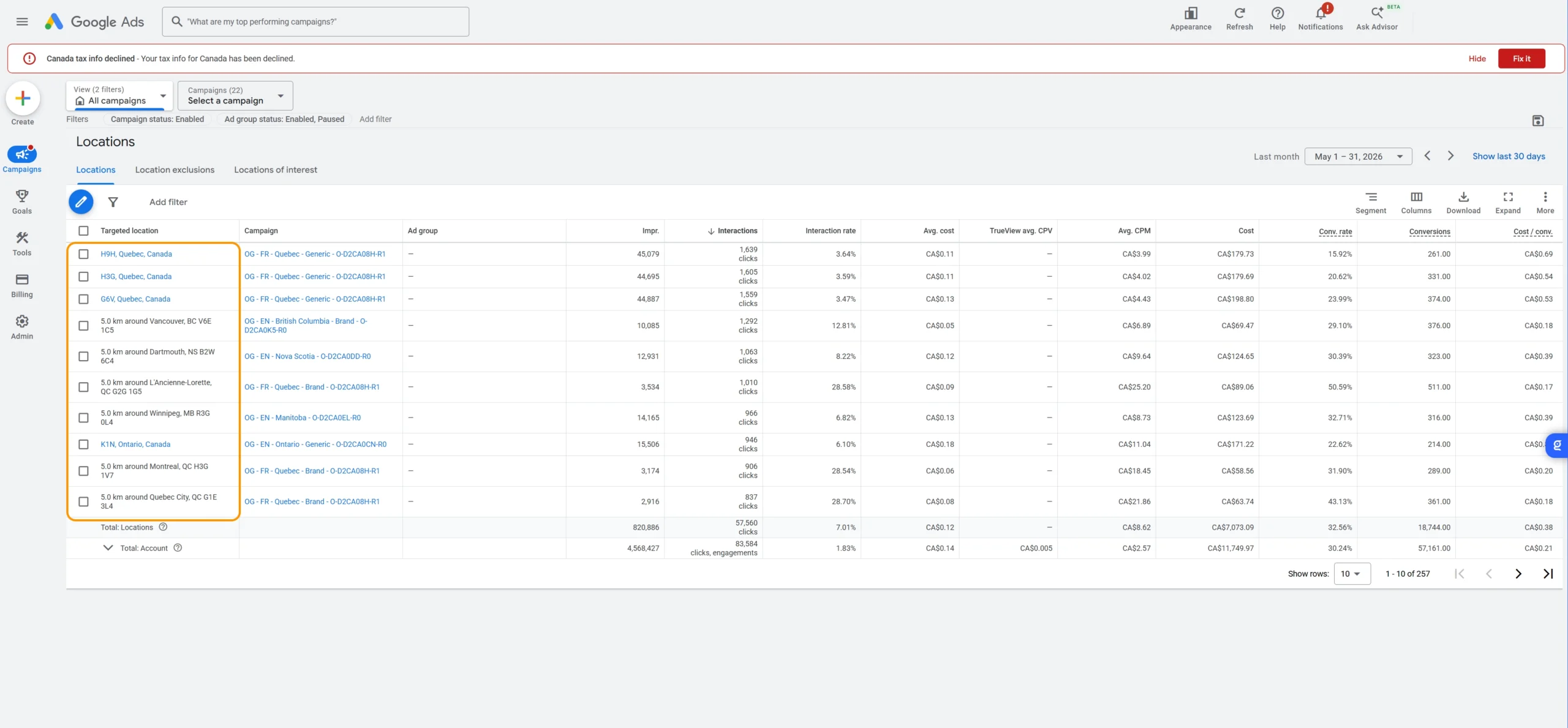
Check:
- Targeted ZIP/postal codes
- Radius targeting
- City targeting
- Excluded areas
- Presence setting
- Location report performance
Do not target a 40-mile radius just because it looks good on a map.
Target where you actually want jobs.
If certain towns produce bad leads, exclude them.
If wealthy suburbs produce bigger projects, isolate them into their own campaign with dedicated budget.
Fix 6: Turn Off Search Partners Until Proven Otherwise
Google Search Partners can sometimes work.
But for a struggling small-business account, I usually turn it off until the core search campaign is profitable.
You need control before expansion.
Search Partners can hide low-quality placements behind blended reporting.
For a local service company with a tight budget, that is not where I want to start.
Fix 7: Track Calls Like Revenue Depends on It
Because it does.
For landscaping, phone calls are often the highest-value conversion.
But not every call is equal.
A 9-second call is not a lead.
A 3-minute call asking about a backyard renovation probably is.
Set call conversions based on meaningful duration.
Then review call recordings or call logs if available.
You want to know:
- Was the caller in your service area?
- Did they ask for a service you offer?
- Were they price shopping?
- Did they book an estimate?
- Did the call turn into a job?
This is how you stop optimizing toward junk.
Fix 8: Send Traffic to a Dedicated Landing Page
Do not send paid traffic to your homepage.
A homepage has too many distractions:
- About page
- Blog
- Careers
- Gallery
- Random navigation links
- Multiple services
- Weak CTA
- Slow mobile experience
Paid traffic needs one job.
Convert.
For a landscaping campaign, build a dedicated landing page for the specific service.
A good page should include:
- One clear headline that matches the ad
- One primary call to action
- Fast mobile load speed
- Click-to-call button
- Short quote form
- Service-area proof
- Before-and-after photos
- Reviews
- Trust badges
- Clear list of services offered
- Clear list of areas served
- No distracting navigation menu
If someone clicks an ad for “patio installation contractor,” the page should be about patio installation.
Not your entire company history.
The “System Before Spend” Pivot
Here is the hard truth.
Fixing one Google Ads setting will not save a bad system.
You can tighten keywords, add negatives, and fix location targeting. Good.
But if you are still sending traffic to a slow homepage with vague messaging and broken tracking, you are still leaking money.
That is why our philosophy at AdGenius Pro is simple:
System Before Spend.
Before scaling ad budget, you need three things working together:
1. A Clean Ad Account
Your campaigns need:
- High-intent keywords
- Tight match types
- Strong negative lists
- Controlled geography
- Relevant ad copy
- No lazy default settings
- No blind automation
2. A Conversion-Focused Landing Page
Your landing page needs to answer the buyer’s question fast:
“Can this company solve my problem, in my area, without wasting my time?”
If the answer is not obvious in five seconds on mobile, you are losing leads.
3. Accurate Tracking Infrastructure
Your tracking must tell you what is actually happening.
Not vanity metrics.
Not fake conversions.
And No mystery dashboards.
You need to know:
- Which keyword drove the lead
- Which ad generated the call
- Which location produced the quote request
- Which campaign created booked work
- Which leads turned into revenue
Without that, you are not managing Google Ads.
You are guessing.
And guessing at $1,500/month gets expensive fast.
So, Is Google Ads Worth It for Small Business?
Yes.
But not the way most small businesses run it.
Google Ads is worth it if you have:
- A clear service offer
- A profitable job value
- A defined service area
- High-intent keyword targeting
- Proper negative keywords
- Dedicated landing pages
- Accurate conversion tracking
- Someone reviewing the account regularly
Google Ads is not worth it if you have:
- Broad Match keywords with no guardrails
- Fake conversions
- Weak call tracking
- Generic homepage traffic
- Bloated service-area targeting
- No search term cleanup
- A “set-it-and-forget-it” freelancer
- An agency hiding behind clicks and impressions
For a landscaping company, Google Ads can absolutely work.
But it should not take five months and $8,000 to find out whether your leads are real.
Your buddy with the HVAC company is not living in a different universe.
He probably has tighter service targeting, higher emergency intent, clearer conversion tracking, or a better-built campaign.
HVAC also has urgent demand. When the furnace dies, people act fast.
Landscaping is different. It often has more browsing, quoting, and project comparison. That means your landing page, offer, photos, reviews, and qualification process matter even more.
You cannot afford sloppy traffic.
You need fewer junk clicks and more serious project inquiries.
Get a Brutally Honest Google Ads Audit
If you are spending $1,500/month and still cannot tell which clicks became real jobs, your problem is not “the algorithm needing more time.”
Your problem is the system.
At AdGeniusPro, we audit Google Ads accounts for small businesses that are tired of vague dashboards, fake conversions, and agencies that celebrate clicks while the phone stays quiet.
We will show you exactly:
- Where your budget is leaking
- Which search terms are wasting money
- Whether your location targeting is broken
- Whether your conversions are real or fake
- Whether your landing page is killing leads
- Whether your tracking setup can be trusted
- What we would fix before spending another dollar
No long-term contract.
No hiding behind vanity metrics.
And No “just increase the budget” nonsense.
Just a clear, brutally honest Ad Account Audit or Tracking Infrastructure Audit so you know whether Google Ads is worth fixing — or whether you should pause before wasting another month of spend.